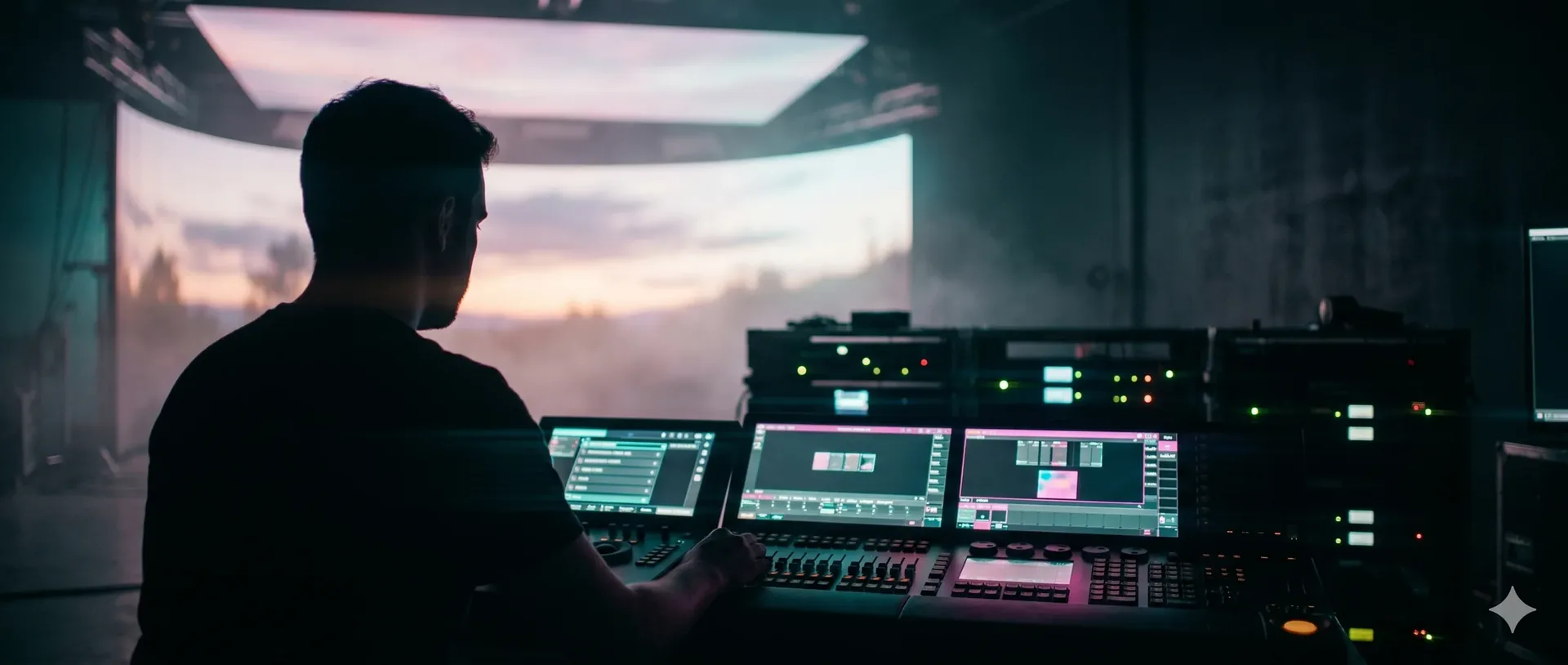
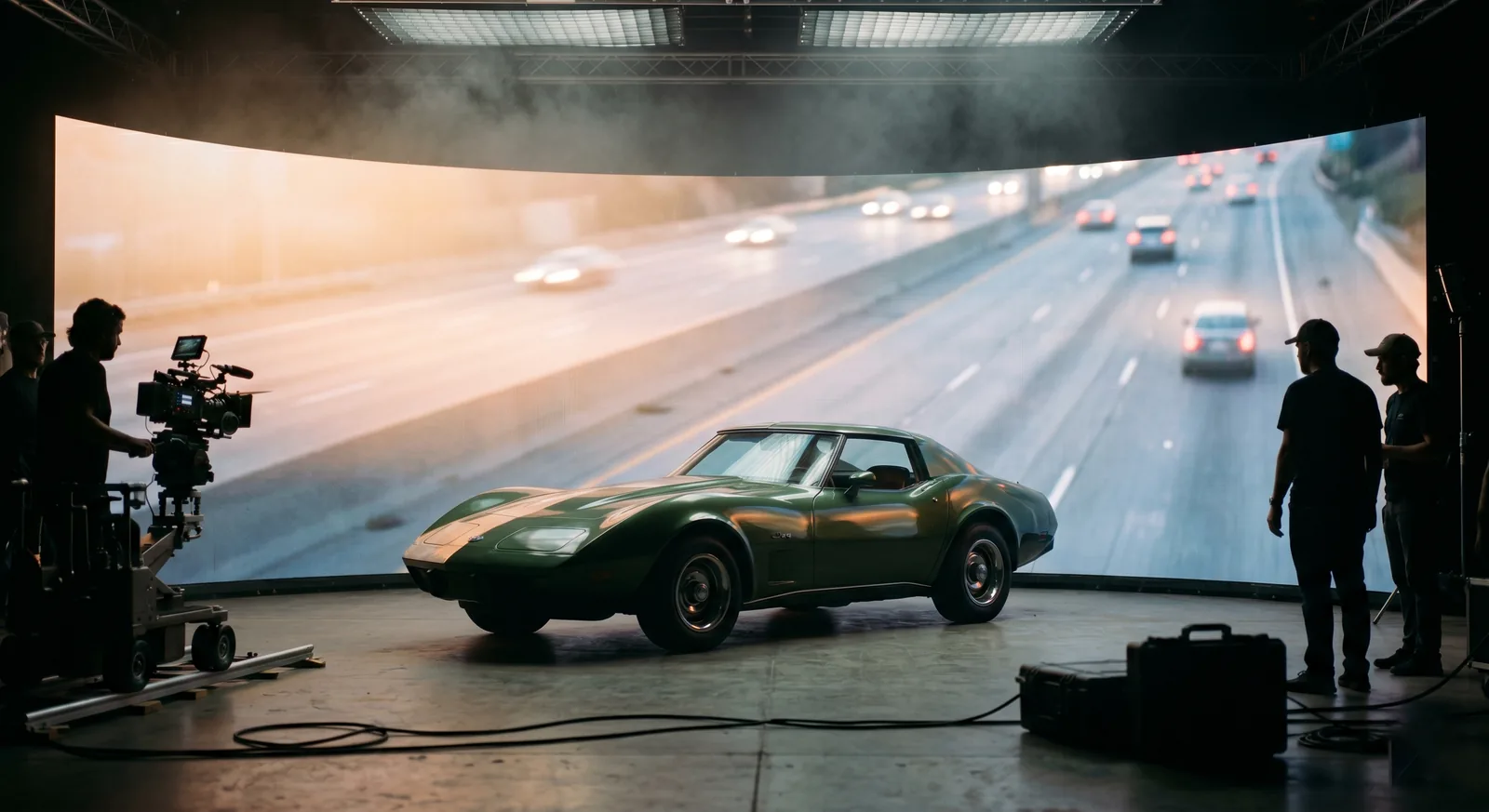
Every car-on-stage day starts with the same question: commission a custom driving plate, or pull one from a library? Both put motion outside the window. The real decision is how much the world beyond the glass has to match your story, and what that match is worth on the budget.
A driving plate is the moving footage that plays behind a stationary car, on the LED wall or a rear screen, so the actors can work while the world rolls past. Custom means footage shot to order on a chosen route. Stock means a clip licensed from a library like drivingplates.com. Cineva does not shoot the plate. We build and run the playback that makes whichever one you pick read real on camera. So the sourcing call is yours, and it usually comes down to three things.
When custom wins
Commission a plate when the audience can place the road. If the script needs a recognizable skyline behind the windshield, continuity with exteriors you already shot on location, a specific time of day, or a direction of light that has to match your key, a generic clip will fight you. Branded or cleared signage, a particular season, a stretch of real highway the story names: that is custom territory. You are buying geography and continuity, and there is no library shortcut for either.
When stock works
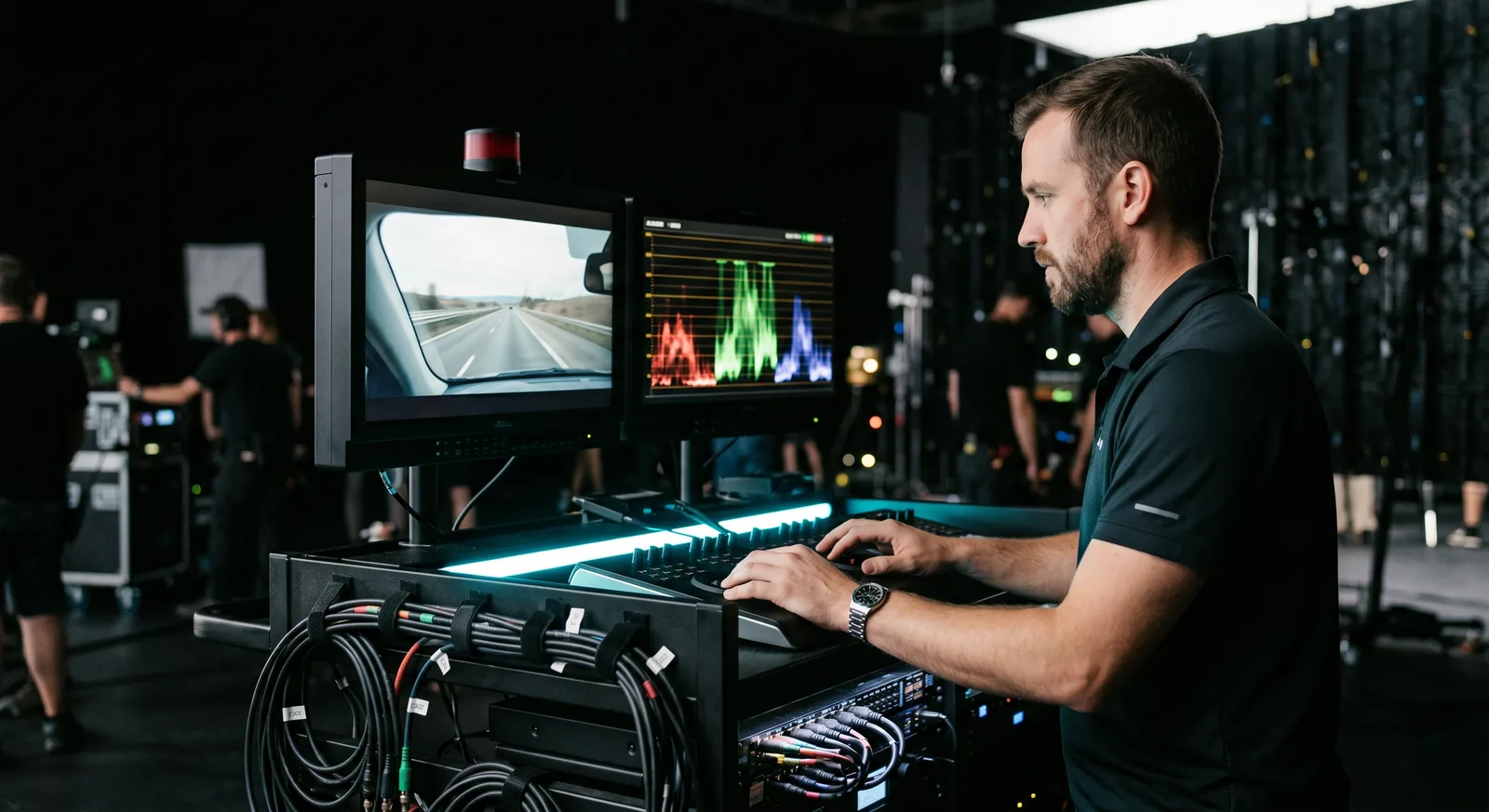
Pull from stock when the window is motion, not a place. Anonymous highway, blurred night city, a suburb no one needs to identify: a library clip does that job immediately and for a fraction of the cost. Defocus and shallow depth of field hide the specifics anyway. Good libraries also give you matched coverage in several directions, so turns and reverses cut together instead of stranding you with one usable angle.
The hybrid
Most days are a mix. Custom for the hero beats that establish where you are, stock for the in-between coverage, the pickups, and the inserts where nobody is reading the background. The trick is grading the two sources so the cut never betrays which is which. Plan the split before the shoot day, not at the monitor.
Playback is the catch
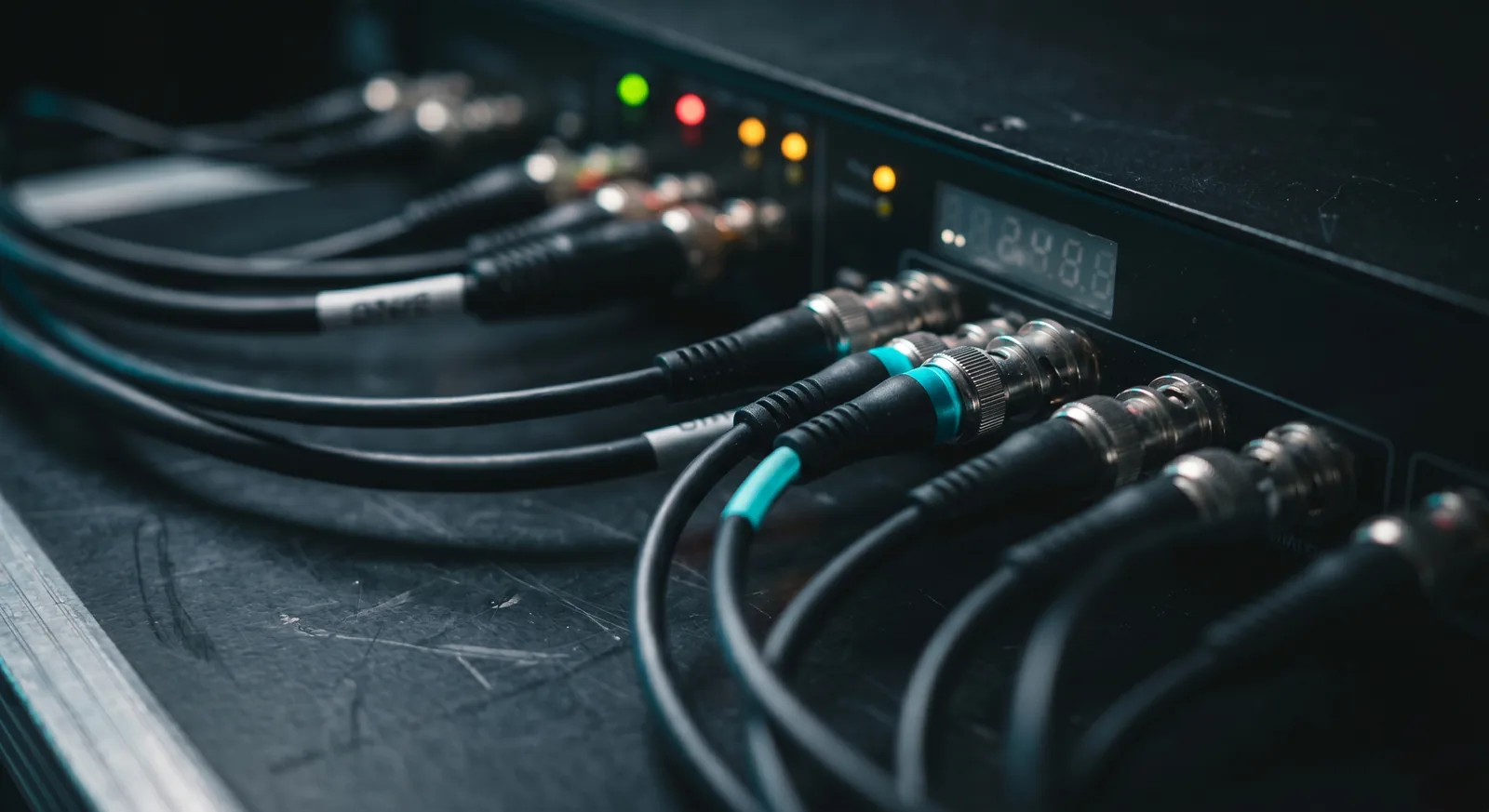
Whichever way you source it, the plate only works if the playback is right. Brightness has to be matched to the wall, colour calibrated to your camera, and the move synced frame-accurate through timecode and genlock so the background tracks the rig instead of sliding against it. A beautiful custom plate played back wrong still reads fake; a humble stock clip handled properly disappears. That last mile, built around your car, stage, wall, and camera, is the part we own.