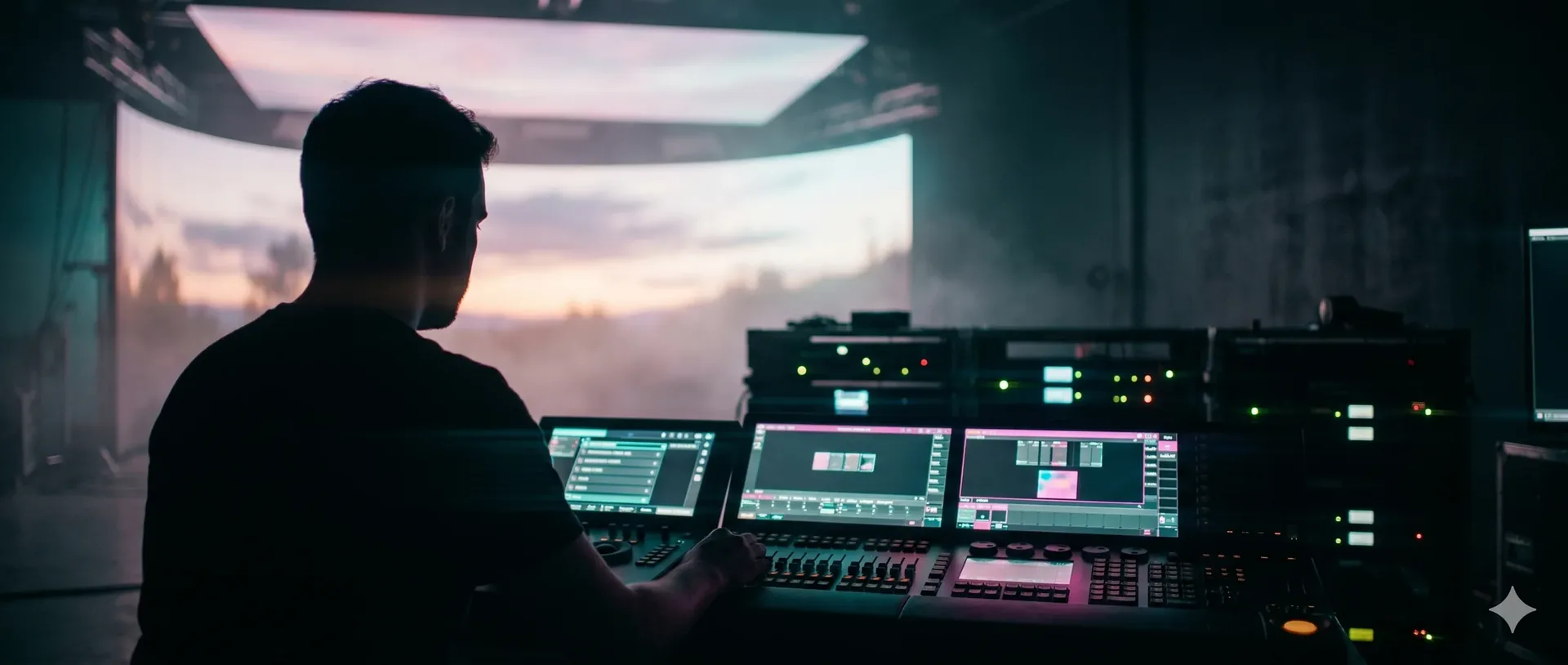
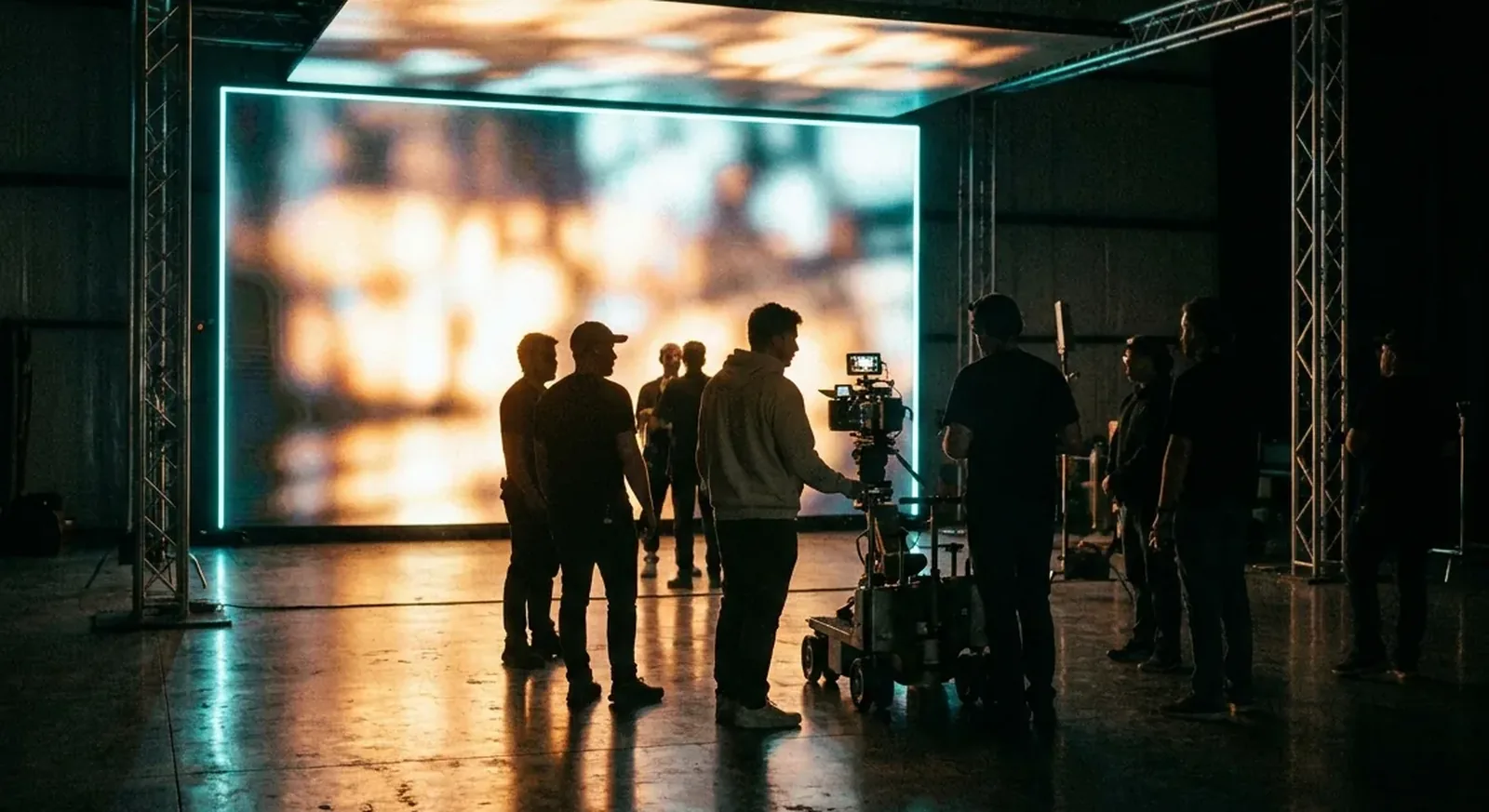
The LED wall behind The Mandalorian was built from ROE Black Pearl panels. Cineva by Apex Sound & Light stocks one of the largest Black Pearl BP2 V2 inventories in North America. That is the same panel, and this is what it puts on your camera.
Most buyers know one fact about virtual production: the show used a giant LED wall. The fact worth knowing is which wall, and why it held up under a cinema camera when a brighter, cheaper screen would not. A film-grade panel is not a brighter screen. It is a screen the camera believes.
Film-grade panel
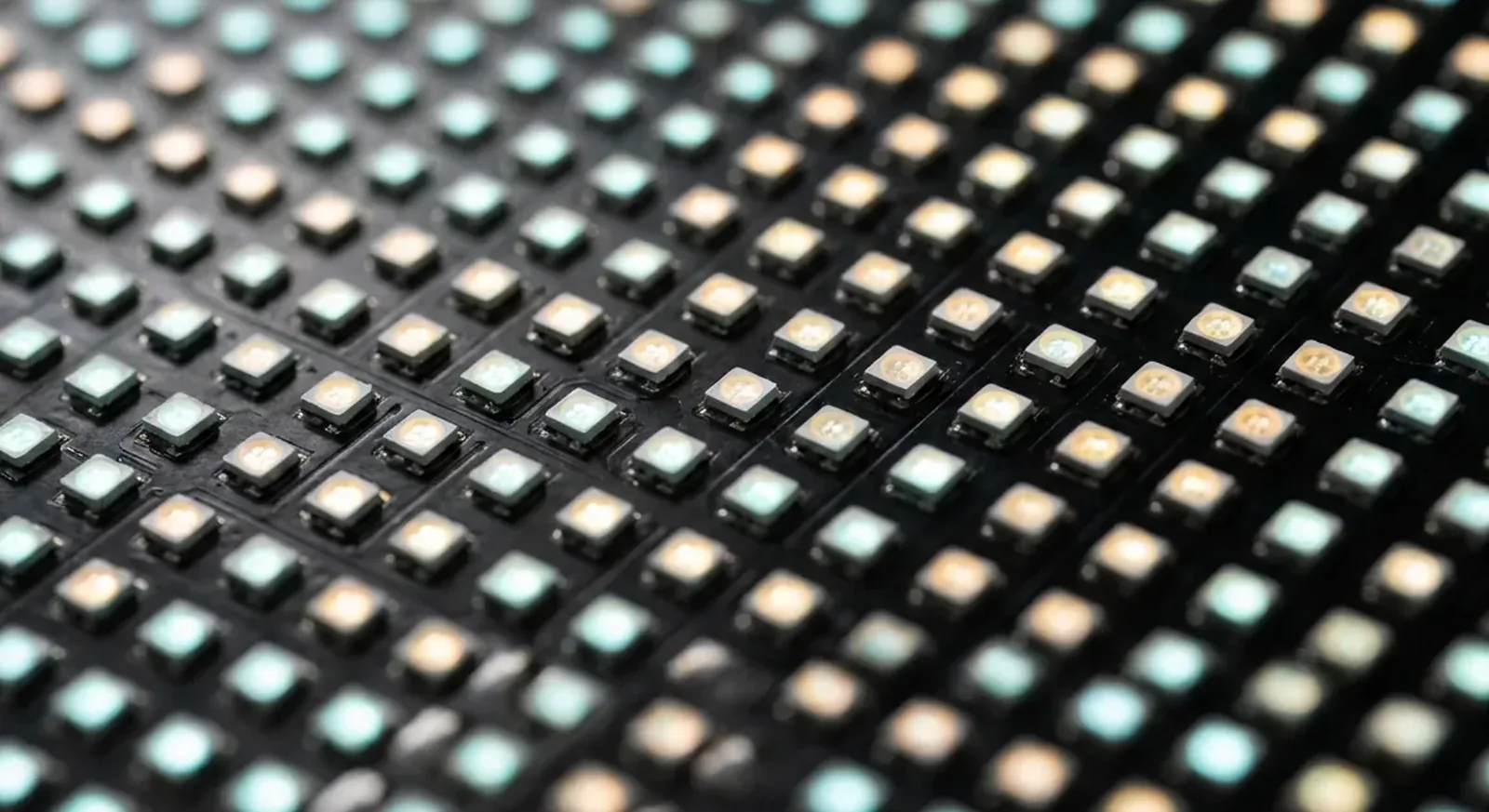
The BP2 V2 runs a 2.84mm pixel pitch, which is the distance between LEDs and the thing that decides how close your lens can sit before the grid shows. It refreshes at 7680Hz and carries 16-bit colour, so it holds a clean image at high shutter speeds and resolves smooth gradients instead of banded skies. Calibrated brightness sits around 1,500 nits, enough to light faces and throw real reflections without blowing out.
Those numbers are not spec-sheet decoration. Refresh keeps the wall from strobing on a fast shutter. Bit depth is the difference between a sunset that grades and one that stair-steps. Pitch is what lets the camera get close.
Why it earns the name
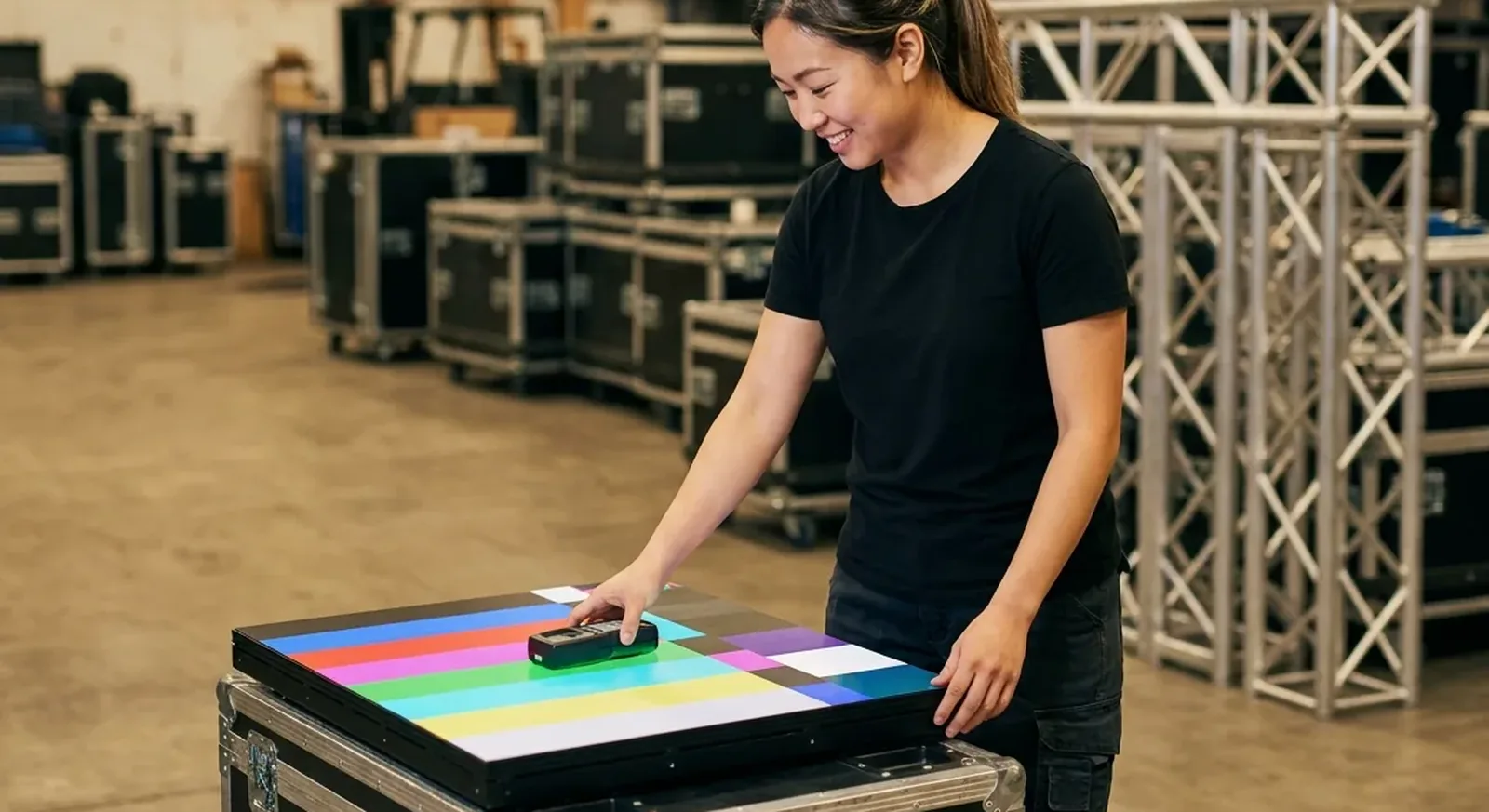
The reason this panel became the reference for virtual production is that Industrial Light & Magic built its StageCraft volumes around it and calibrated the wall to the camera, not the eye. Matched to a cinema sensor, the panel renders colour the way the lens will record it, so what the DP frames is what lands in camera. That calibration discipline is why the look held across a season, and it is the same discipline we run on every wall we build.
We will not print a tile count we cannot stand behind, and the show's exact build is theirs. What we can stand behind is the panel and the practice: the same Black Pearl platform, matched-batch, calibrated to your camera system before it ships.
When BP2 is right
The BP2 is the right call when the camera works close to the wall and the background has to read as a real place: in-camera environments, drivable interiors, controllable skies, reflective surfaces that have to pick up the scene. When the wall only ever sits far back and soft, a coarser pitch can do the job for less. The honest answer is shot-dependent, which is why we spec it on a walkthrough rather than over the phone.
The panel is the part people recognize. The result comes from the panel plus the calibration, the processing, and the crew who tune it to your day. We stock the first and run the rest.