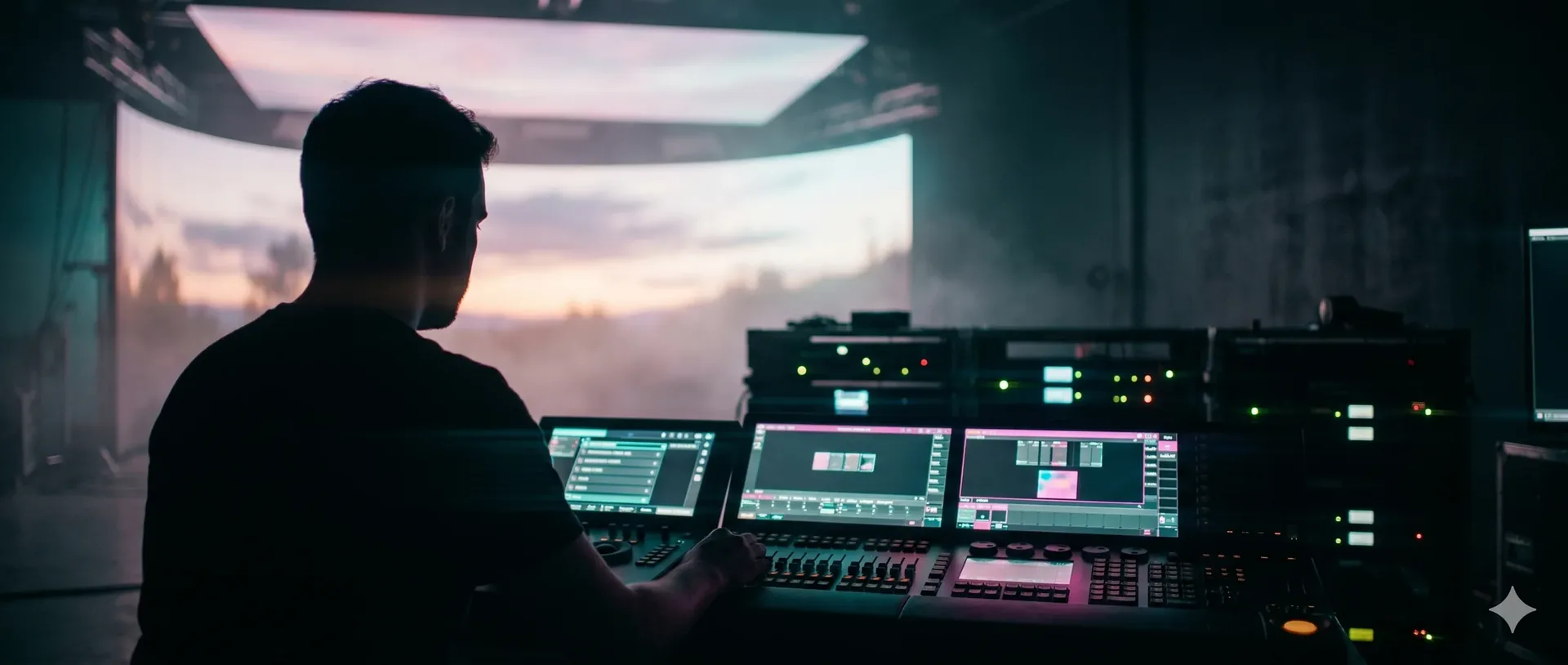
The same volume build goes two very different ways depending on when you call. Phone Cineva by Apex Sound & Light at greenlight and the build has room to breathe. Phone the week before the shoot and the same gear shows up, but the week around it gets a lot harder.
The kit does not change. The panels, the processing, the content pipeline are the same either way. What changes is runway, and runway is the cheapest thing on the budget. It costs you a phone call and a rough date. It buys you a week where problems get solved on a bench instead of on the clock with a crew standing by. There is no line item for it, which is exactly why it gets spent late.
What prep buys
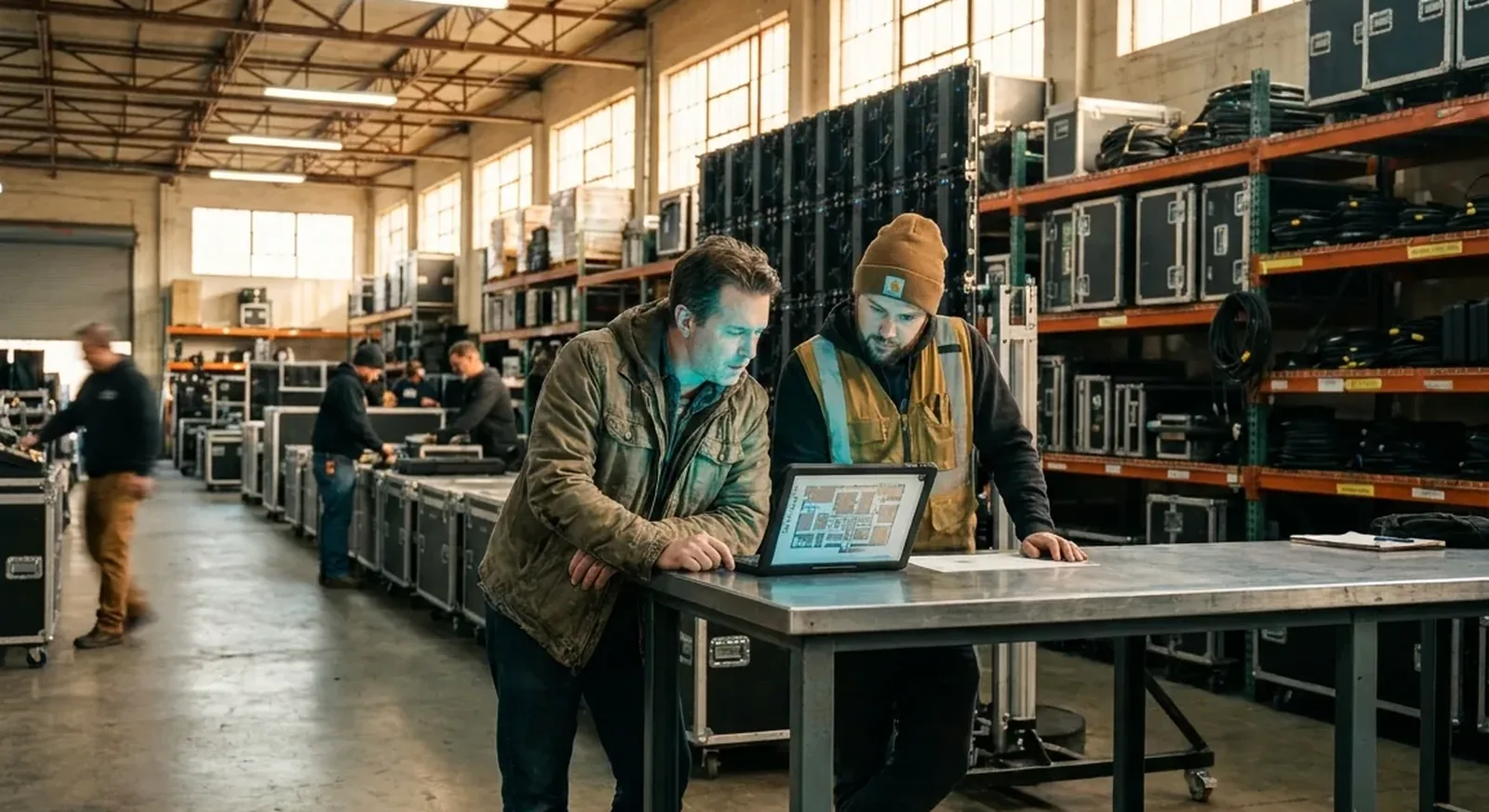
Early runway is time to spec the wall to the actual shot rather than a guess. We size the volume to your camera, your closest lens-to-wall distance, and the look you are after. We pull matched-batch panels, calibrate them on the bench, and load the content pipeline before any of it touches the stage. We check the power draw against what the room can actually give. We catch the conflicts that only show up when you lay the real floor plan over the real space: a ceiling height that limits the wall, a load-in door that decides how the trusses come in, a generator that has to be ordered weeks out.
It is also time to ask the questions that change the build. How close does the lens really get. Does the scene need a curved wall or a flat one. Is there reflective surface in frame that has to pick up the background. Asked at greenlight, those answers shape the order. Asked at load-in, they become problems.
None of that is glamorous. All of it is the difference between a load-in that runs to schedule and one that eats your first shooting day finding out the feed does not lock.
Pre-light vs load-in
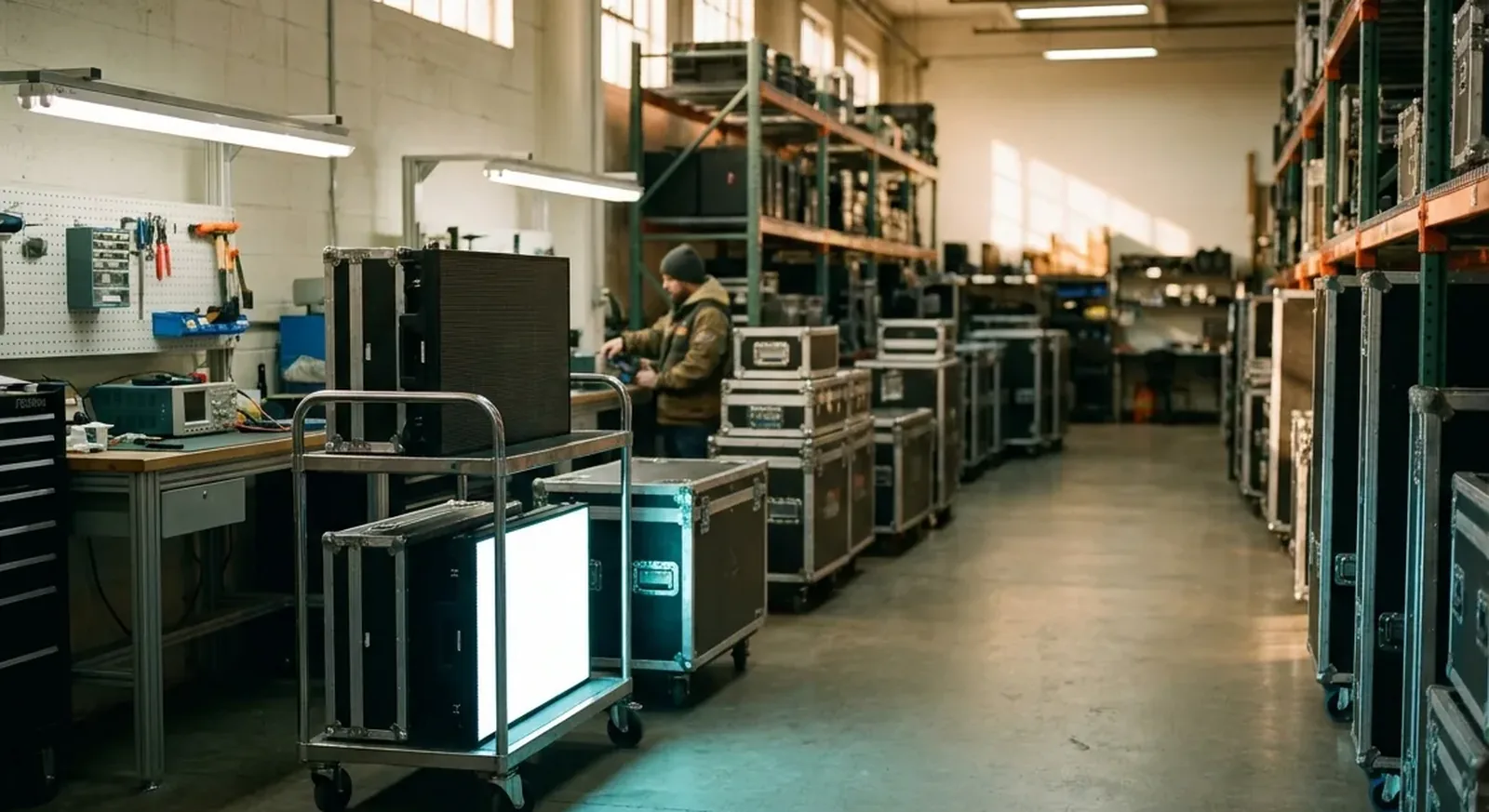
Load-in day is for rigging and power, not for discovery. By the time the truck arrives, the wall should already be calibrated, the content tested, and the camera workflow proven on a bench build. That is what pre-light is for. It is the day the colour gets matched to your sensor, the playback gets walked through with your team, and the surprises get found in a quiet room instead of in front of a full unit.
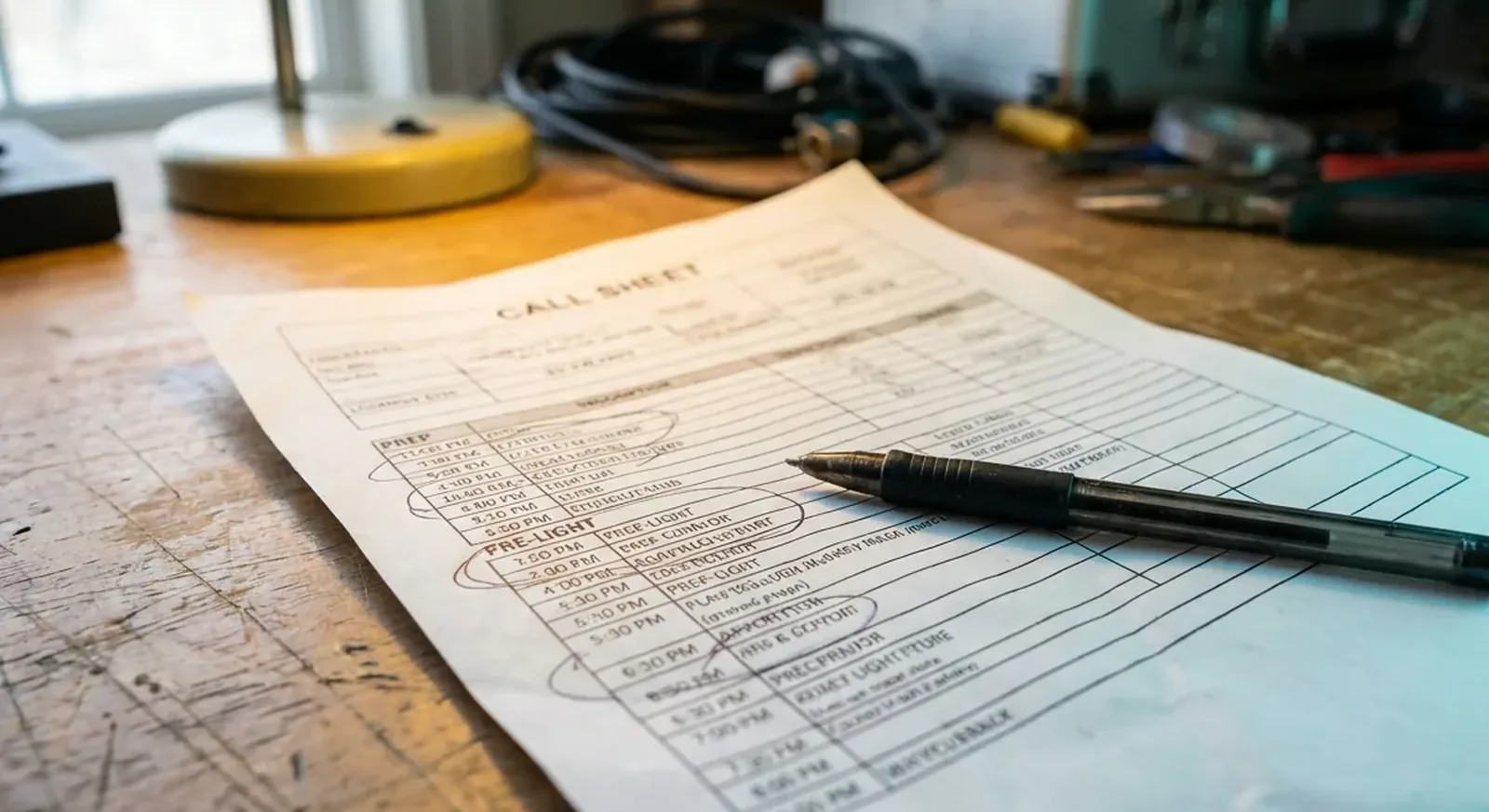
Call early and pre-light is a planned day with a clear list. Call late and pre-light collapses into load-in, which means you are tuning the wall while the grips are rigging and the AD is asking when you can roll. Same hours of work, far worse place to do them.
Cannot fix on the day
A few things cannot be solved once the clock is running. Matched-batch panels have to be pulled and tuned ahead, because the wall has to read as one surface, not a patchwork of slightly different tiles. Content built for the wrong resolution or the wrong refresh has to be rebuilt, not patched at lunch. Power that the room cannot deliver is not a same-day fix; it is a generator order and a cable run. And calibration to your specific camera is bench work, not a thing you eyeball between setups.
Those are the items that turn a late call into a lost morning. They are also the items early runway makes invisible, because they get handled before anyone is waiting on them. The crew that builds the wall is the same crew that runs it on the day, so the knowledge from prep walks straight onto the floor with them.
Call at greenlight and you are buying yourself the cheapest insurance on the production. Call the week before and the build still happens, but you have spent your margin on stress instead of on the screen.