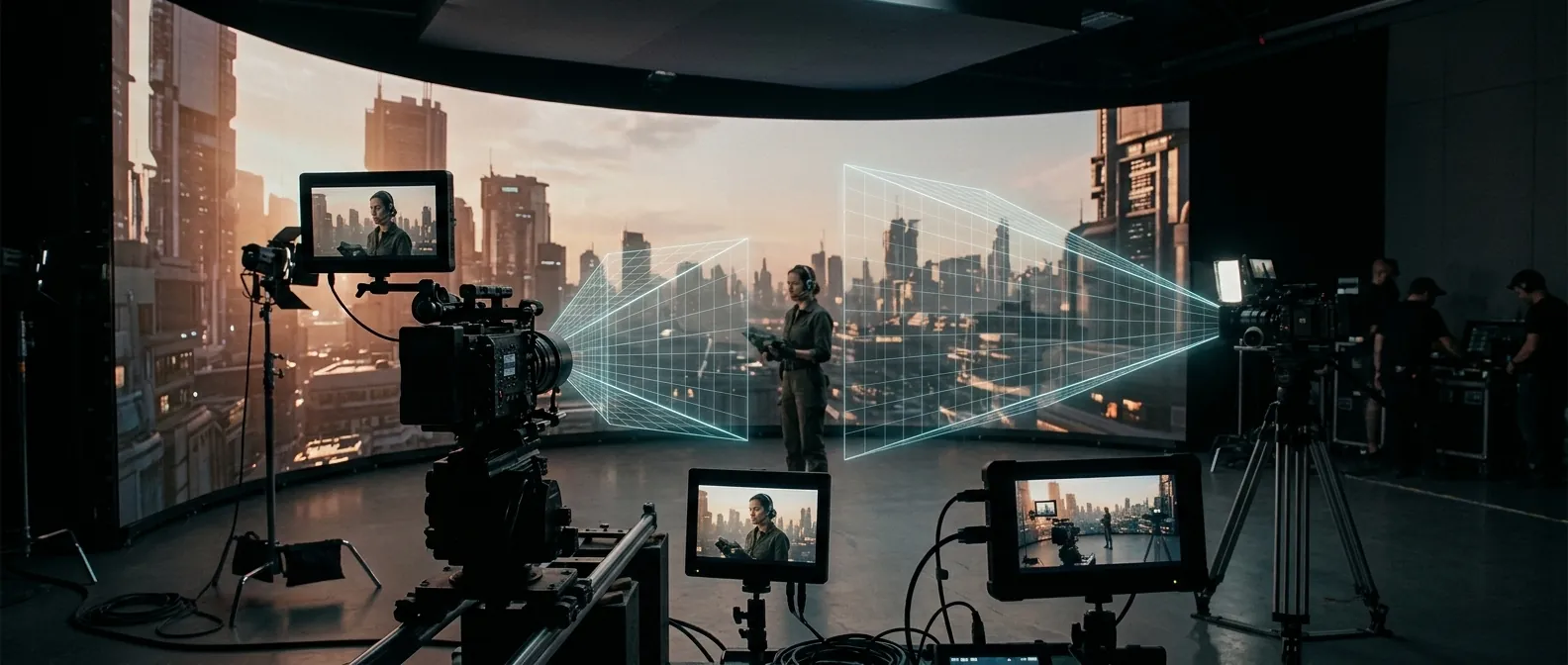
Frame Remapping Every camera sees its own perspective.
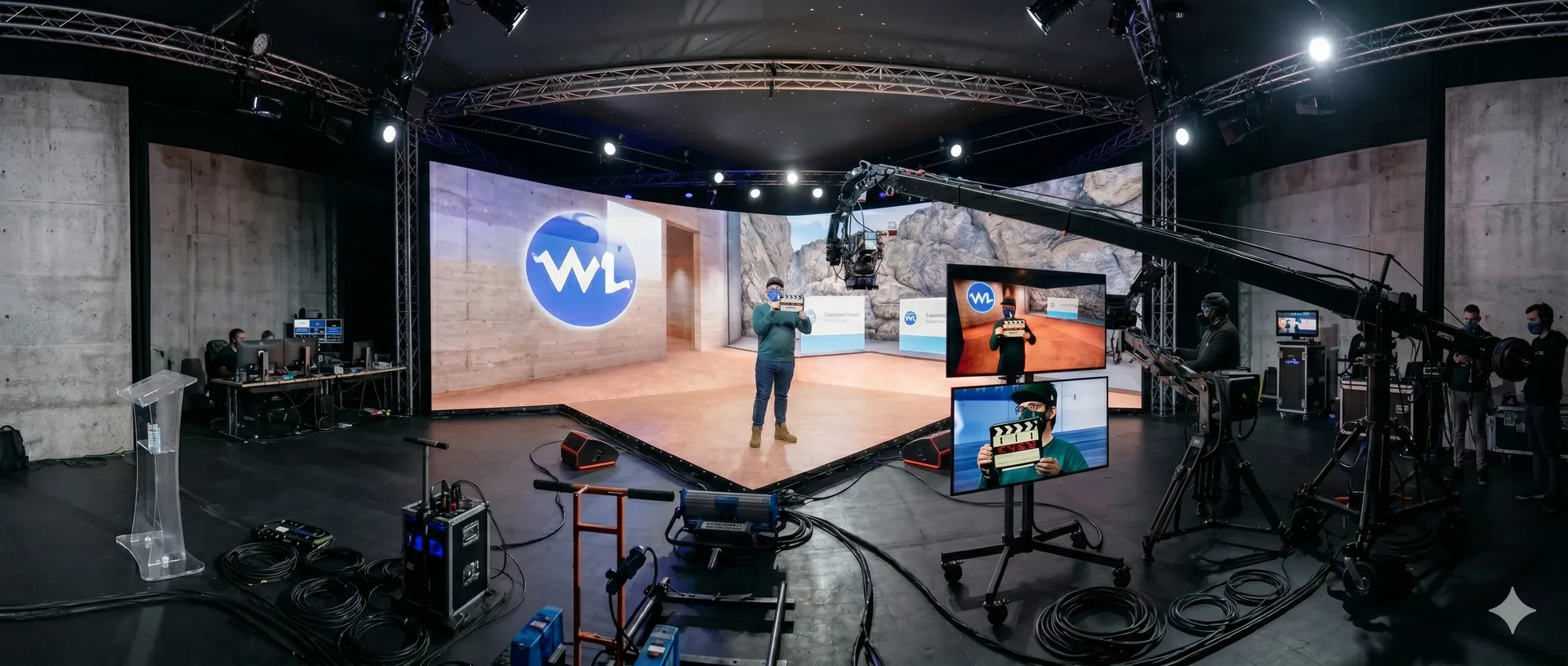
Frame remapping lets multiple genlocked cameras see the LED wall from their own correct perspective. Not the wide shot’s perspective. Not a compromise. Each camera gets the background it needs for its angle.
For multi-camera virtual production, that matters. Without frame remapping, a second camera can see the wrong parallax, making the environment feel off. With it, the background responds properly to each camera position, so the shot holds together across coverage.
It can also support green screen workflows, giving the crew a live on-set visualization of the finished shot while still capturing the clean elements needed for post.
Cineva sets up the system, checks the camera relationships, and confirms the workflow before production is relying on it. When frame remapping is right, it disappears. When it is wrong, everyone sees it. Our job is to make sure it disappears.
Common questions
Before you spec the remap.
What is frame remapping?
A Brompton Tessera feature that lets multiple cameras each see a different, correctly rendered perspective on the same LED wall at the same time. Without it, camera tracking only looks right from one position. With it, every camera sees its own point of view.
We're shooting multi-camera. Does each camera get the right background?
Yes. Frame remapping sends each camera its own rendered perspective, even though they're all looking at the same wall. Each one sees the scene from where it's standing.
Can we shoot virtual background and green screen at the same time?
Yes. Frame remapping lets you interleave solid colour frames between your content frames. One camera captures the VP background, another captures a clean green or blue matte off the same wall. You get both in a single shoot.
Does frame remapping work alongside your other processing features?
Yes, it runs in harmony with HFR+, Ultra Low Latency, and ShutterSync on the SX40 and S8. No trade-offs in the rest of your pipeline.